Skip to Content

Energies

Energies is a peer-reviewed, open access journal of related scientific research, technology development, engineering policy and management studies related to the general field of energy (from technologies of energy supply, conversion, dispatch and final use to the physical and chemical processes behind such technologies), and is published semimonthly online by MDPI.

All Articles (61,233)

The rapid expansion of non-dispatchable renewable energy sources (VRE) and energy storage technologies raises fundamental questions regarding the structural limits of their integration into power systems. This study aims to determine, from a structural reliability perspective, the adequate penetration limits of VRE in a synthetic power system and to assess how firm generation share, storage capacity, and wind–solar technology mix influence system reliability. A synthetic annual load profile reflecting current European conditions was developed from real-life data, along with a set of indicators enabling the consistent characterization and comparison of demand profiles. A deterministic system model was then applied to evaluate power and energy balance under parametrized configurations of firm generation, variable renewable capacity, and storage. Reliability performance was assessed using proposed indices (RIs) covering, among others, capacity margin, loss of load duration, frequency, etc. The results demonstrate the existence of structural penetration limits of non-dispatchable renewables that cannot be eliminated solely by increasing storage capacity, but only shifted. The technological composition of VRE is shown to be as important as total penetration: higher wind shares improve seasonal alignment and reduce reliability risks, whereas PV-dominated configurations increase curtailment and storage dependence. Moderate overcapacity, combined with a balanced wind–solar mix, provides the most favorable structural reliability conditions. These findings underscore the importance of incorporating reliability-based structural constraints into long-term energy transition planning, beyond purely economic optimization criteria.

1 March 2026

Annual grid-scale battery storage additions based on International Energy Agency data provided in [8].

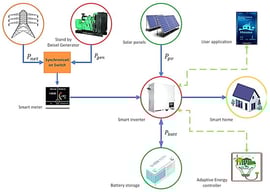
In grid-deficient environments, residential energy systems face severe carbon emission penalties due to mandatory reliance on diesel standby generators during supply interruptions. In Iraq, summer peak loads routinely exceed grid capacity, triggering prolonged generator operation and dramatically increasing household carbon footprints. This study presents a deep Q-network (DQN) reinforcement learning framework for intelligent battery energy storage system (BESS) scheduling, targeting carbon emissions reduction through strategic peak shaving. The DQN agent learns optimal battery dispatch strategies by internalizing diurnal patterns in load and solar generation through temporal state features, enabling anticipatory control without requiring explicit external forecasting models. The system is trained on one-year operational data from a representative Iraqi residential installation and evaluated over the critical summer period (122 days, 35.5% grid unavailability). The results demonstrate a 54.8% CO2 reduction (306.5 kg versus 677.4 kg baseline), a 25.5% reduction in generator runtime, and a 23.7% reduction in operating costs for the studied configuration. The learned policy approaches 89.6% of perfect-foresight MILP performance while executing 35,000 times faster. A reward function sensitivity analysis across five weighting schemes confirms that the 20:1 carbon-to-cost priority ratio optimally balances environmental and economic objectives. Ablation studies quantify the mechanism contributions: anticipatory pre-charging accounts for 58% of the total improvement, discharge optimization for 44%, and real-time PV coordination for 22%. These findings establish DQN-based BESS optimization as a practically deployable decarbonization approach for residential systems in grid-constrained developing regions.

1 March 2026

Hybrid energy system architecture.

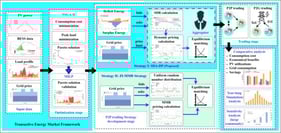
The rapid growth of distributed solar energy, such as rooftop photovoltaics (PVs), has revolutionized conventional power systems into more distributed networks, enabling end-users to engage in and trade within the energy market. Maximizing the benefits of rooftop PV panels for residential end-users, including increased renewable energy use and reduced reliance on the utility grid, remains an essential challenge in conventional centralized markets. Moreover, reducing energy consumption may lead to increased peak demand, decreased self-consumption, reduced system flexibility, and reduced grid stability. Therefore, this study presents a transactive energy market framework that integrates home energy management systems (HEMSs) with multi-objective optimization and an aggregator-based, distributed peer-to-peer (P2P) trading strategy to increase rooftop PV utilization and reduce grid dependency within an intra-residential community. The HEMS is structured to integrate rooftop PV production, battery energy storage systems, and smart appliances to offer flexibility through demand response programs in balancing supply and demand by scheduling appliances during periods of rooftop PV production and lower grid prices. Multi-objective (i.e., minimizing energy consumption cost and peak load) optimization problems are solved using the Non-Dominated Sorting Genetic Algorithm-II (NSGA-II) by achieving a Pareto-optimal solution. To validate the reliability and optimality of the NSGA-II results, the same problem formulation is solved using a mixed-integer linear programming approach. Moreover, a Strategic Double Auction with Dynamic Pricing (SDA-DP) strategy is proposed to support P2P trading among consumers and prosumers and thereafter compared with a rule-based zero-intelligence strategy with market-matching rules to analyze the trading performance of the proposed SDA-DP. The results of this comparative analysis (for 10 households, year-long simulation with 15 min time resolution) demonstrate that compared to the baseline case, integrating NSGA-II optimization with SDA-DP trading significantly enhances rooftop PV utilization by 35.11%, reduces grid dependency by 34.04%, and reduces electricity consumption costs by 30.53%, with savings of €1.93 to €6.67 for a single day after participating in the proposed P2P market.

1 March 2026

Transactive energy market (TEM)-based P2P trading framework and P2P strategy-based comparative analysis. The first stage is to collect input data from the TEM. The second stage is the optimization stage, in which community end-users schedule their loads through the DR program using NSGA-II to solve the multi-objective problem and achieve a Pareto-optimal solution. Later, to validate the reliability and optimality of the NSGA-II results, the same problem formulation is solved using an MILP approach. The third stage uses the TEM market to execute P2P trading within the community, utilizing the SDA-DP strategy (proposed) by introducing an aggregator. Later, the ZI-MMR strategy is integrated to assess the performance of the proposed TEM framework. The fourth stage, P2P trading, is initiated, and a comparative analysis is conducted. Finally, to enhance the generalizability of the proposed TEM framework, the NSGA-II model and SDA-DP strategy are applied to a multi-day, year-long analysis by maintaining seasonal variability in solar availability. Moreover, to assess the performance of the proposed TEM, a sensitivity analysis was performed for a large residential community with 10, 25, 50, and 100 end-users.

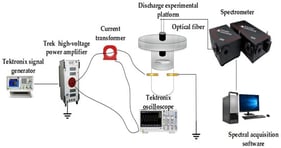
With the expanding frequency range of power equipment, understanding the frequency-dependent insulation performance of air becomes crucial. To address this, this paper establishes an integrated electrical–optical measurement platform for air breakdown to study the variation patterns of electrical and spectral characteristics of air breakdown at different frequencies. The effects and underlying mechanisms of different frequencies (20 Hz, 50 Hz, and 1 kHz) on the breakdown voltage are explored. Experimental results indicate that the air breakdown voltage increases with frequency as follows: from 17.7 kV at 20 Hz to 18.0 kV at 50 Hz (1.7% increase) and further to 18.9 kV at 1 kHz (5.0% increase from 50 Hz), representing a total increase of 6.8% across the 20 Hz to 1 kHz range. Regarding spectral characteristics, the spectral line intensity enhances with an increase in frequency. Compared to 20 Hz and 50 Hz, the spectral lines of nitrogen ions and oxygen ions become distinctly visible at 1 kHz, the Stark broadening phenomenon intensifies, and transitions from higher vibrational energy levels are enhanced relative to those from lower levels. Analysis via the Boltzmann plot method reveals a negative correlation between electron temperature (Te) and frequency, while the ionization degree (η) shows a positive correlation. Concurrently, the electron drift velocity (vd) increases with frequency, whereas the mean free path decreases (λ). Based on the parallel-plate capacitor model, the air breakdown under the experimental conditions of this study is dominated by collision ionization. As frequency increases, dielectric recovery slows down, and the memory effect strengthens. The interplay between these two competing factors leads to an increase in breakdown voltage with an increase in frequency within the 20 Hz to 1 kHz range. The findings of this study demonstrate that air breakdown exhibits significant frequency dependence, and its breakdown voltage shows statistical distribution characteristics (Weibull parameters) that vary with frequency. This article provides a reference basis for the design of sinusoidal air insulation in the 20 Hz to 1 kHz frequency range.

1 March 2026

Air breakdown emission spectroscopy.

News & Conferences

Issues

Open for Submission

Editor's Choice

Get Alerted

Add your email address to receive forthcoming issues of this journal.

XFacebookLinkedIn
Energies - ISSN 1996-1073